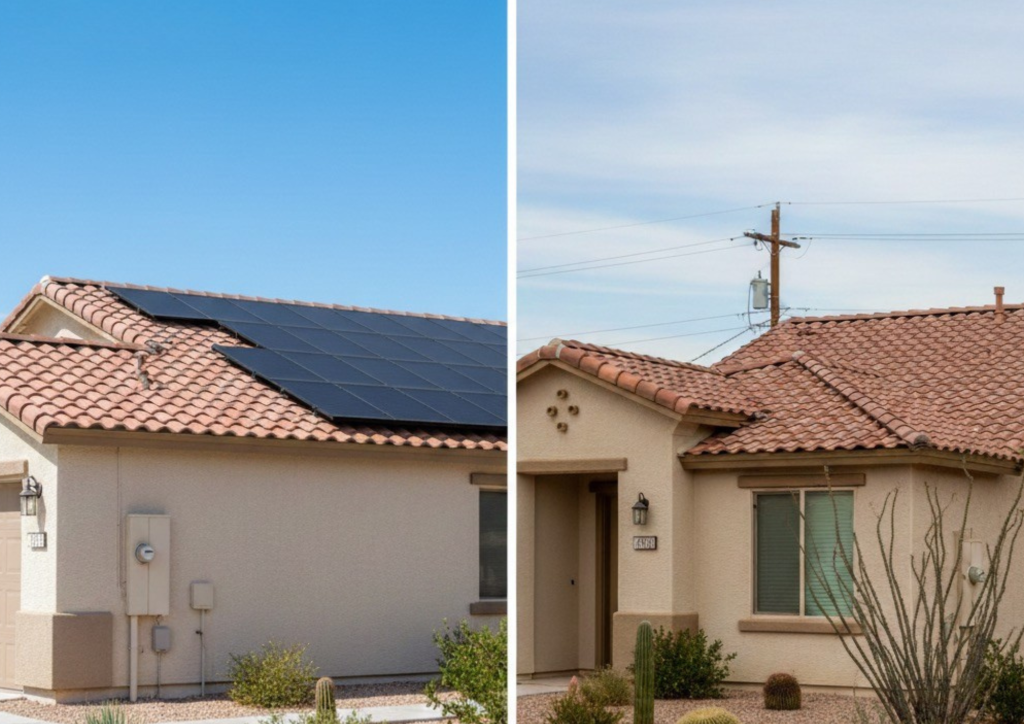
In Nevada, the choice between a home with solar and one without is largely a battle between upfront liquidity and long-term asset growth. Given that Nevada has some of the highest solar potential in the country, the “with solar” option often wins on paper, but the details matter—especially regarding ownership.
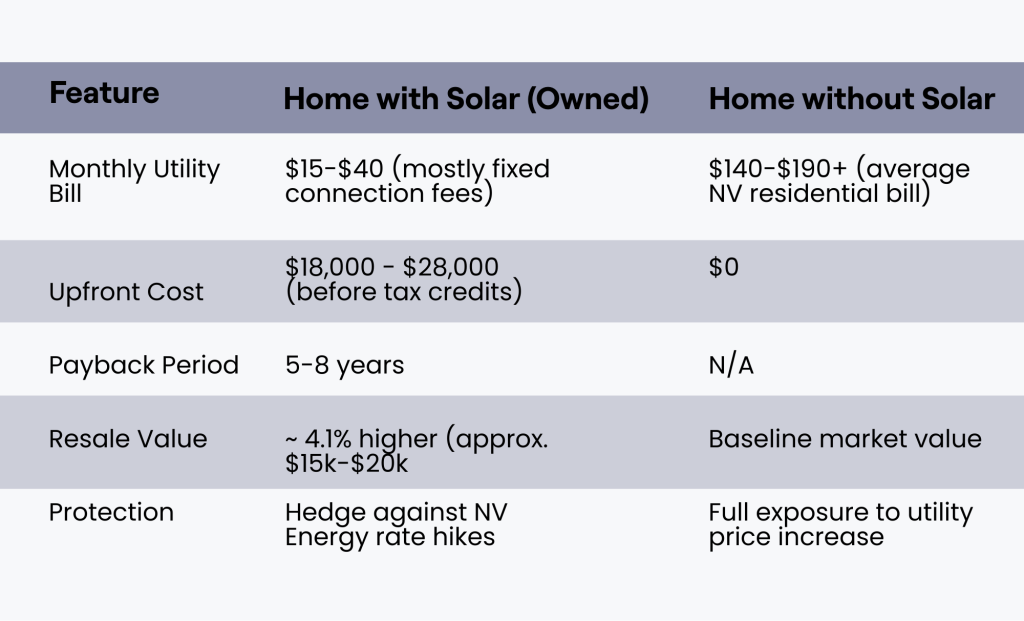
Here is how the two compare in the Nevada market as of early 2026.
1. Financial Comparison
2. The Nevada “Solar Advantage”
* Abundant Fuel: Nevada averages over 300 sunny days a year. A 10kW system here produces significantly more energy than the same system in the Midwest, accelerating your ROI.
* Net Metering (Tier 4): Nevada currently uses a “tiered” net metering system. Under the active Tier 4, you receive 75% of the retail rate as a credit for excess energy you send back to the grid. While not a 1-to-1 trade, it is still one of the more favorable rates in the Western U.S.
* Federal Tax Credit (ITC): You can still deduct 30% of the total installation cost from your federal income taxes. In Nevada, this often brings a $25,000 system down to around $17,500.
3. Pros & Cons at a Glance
With Solar
* Pros: Massive long-term savings; increased home equity; environmental impact; “locks in” your energy costs for 25+ years.
* Cons: High initial cost (if paying cash); roof maintenance is more complex (panels must be removed/reinstalled for roof repairs); potential “liability” if the system is leased rather than owned.
Without Solar
* Pros: No debt or large capital outlay; simpler home sale process; no aesthetic impact on the roof.
* Cons: 100% of money spent on power is “lost” (no equity); vulnerable to NV Energy’s frequent rate adjustments; higher carbon footprint.
4. A Critical Warning: Owned vs. Leased
If you are buying a home in Nevada that already has solar, the type of contract is everything.
* Owned Systems: These are assets. They add value to the home and are included in the mortgage.
* Leased/PPA Systems: These can be liabilities. You (the buyer) must qualify to take over the lease, or the seller must pay it off. Many buyers are wary of 20-year contracts they didn’t sign, which can actually make a home harder to sell.
The Verdict
If you plan to stay in your Nevada home for more than 8 years, solar is almost always the better financial move. If you are buying, look for a home with owned panels—it’s essentially “pre-paid” electricity that you can roll into a low-interest mortgage.